
Navigating Dark Venues: Low Light Wedding Receptions in Toronto
- Lucas T

- Jan 9
- 8 min read

When couples book Toronto's most atmospheric wedding venues—the vaulted stone of Casa Loma, the industrial romance of Steam Whistle, the candlelit intimacy of Berkeley Church—they're drawn to one thing: mood. These spaces weren't designed for Instagram. They were designed for drama, for shadows, for the kind of warm, golden light that makes you want to whisper.
But that same moody ambiance that makes these venues unforgettable also makes them challenging to photograph. Low light, mixed color temperatures, and deep shadows can intimidate couples who worry their reception photos will turn out too dark or unnaturally orange.
Here's the truth: darkness isn't the enemy of beautiful wedding photography. When approached cinematically, low light becomes your strongest creative advantage. As a Toronto wedding photographer who has captured countless receptions in these historic spaces, I've learned that the "problems" of low light venues—the amber glow, the contrast, the shadows—are actually the ingredients that make photos feel cinematic and timeless. View my wedding reception gallery to see this approach in action.
This is how I turn Toronto's darkest reception venues into the most stunning galleries.
TORONTO'S MOST BEAUTIFUL LOW LIGHT WEDDING VENUES
The best reception venues in Toronto share a common trait: they prioritize atmosphere over brightness. These spaces were built decades (or centuries) before LED panels and modern lighting design, and that's exactly what gives them their character.
Here are the venues where low light photography matters most. For a complete guide to Toronto reception venues, see my full breakdown of the best wedding reception locations in the city.

The Library and Conservatory offer moody, Old World elegance with carved wood, stone fireplaces, and warm tungsten light that creates an amber glow. See our Casa Loma wedding gallery.

Industrial romance with exposed brick, high ceilings, and minimal ambient lighting. The warm overhead lights and string lighting create pockets of glow against dark backgrounds—perfect for rim lighting and dramatic portraits like these Steam Whistle wedding photos

Historic bank vault turned ballroom with dramatic architecture and controlled lighting. The gilded details and chandeliers glow beautifully when you use shutter drag to let the ambient light register. See how this technique transforms One King West wedding photos.

Sparkling chandeliers against dark walls create a starlit effect. The contrast between the bright fixtures and dim surroundings requires balancing flash with ambient exposure to avoid blown-out highlights or murky shadows. See how I capture this balance at Madison Greenhouse.
These venues don't need to be "fixed" with harsh lighting. They need to be understood and worked with—using techniques that enhance their natural mood rather than fighting against it.
WHY LOW LIGHT ISN'T A PROBLEM—IT'S AN OPPORTUNITY
A lot of couples worry about one thing when they book a candlelit venue: "Will our photos be too dark?"
It's a fair concern. Low light can feel intimidating, especially for couples planning evening receptions in historic spaces. But here's what most people don't realize: darkness doesn't ruin romance. It creates it.
Toronto's most beautiful reception venues weren't designed for modern photography. They were designed for atmosphere. And when you work with that atmosphere instead of fighting it, the results are unforgettable.

The goal isn't to erase the darkness—it's to guide it. To let shadows exist where they belong while keeping your subjects beautifully lit. To preserve the warm, golden glow of candlelight without turning skin tones orange. To make chandeliers sparkle and architectural details emerge from shadow.
This is where technique separates documentary wedding photography from cinematic wedding photography.
THE TECHNICAL CHALLENGE: WHAT MAKES LOW LIGHT VENUES DIFFICULT
Before we talk about solutions, it's important to understand why low light venues create challenges in the first place.
MIXED COLOR TEMPERATURES
Most historic Toronto wedding venues use tungsten bulbs (warm, orange-yellow light) mixed with candlelight, string lights, and sometimes uplighting from DJs or planners. Your camera's auto white balance gets confused, leading to photos that look unnaturally orange or have inconsistent color across the frame.
DEEP SHADOWS
Spaces like Casa Loma's Library or Berkeley Church have architectural features that create natural shadows—vaulted ceilings, alcoves, dark wood paneling. Without controlled lighting, these shadows can swallow details or make your subjects look underexposed.
DRAMATIC CONTRAST
The difference between the brightest and darkest parts of the frame (dynamic range) is extreme in low light venues. A chandelier might be eight stops brighter than the dance floor below it. Exposing for one means sacrificing the other—unless you use advanced techniques.
MOVEMENT AND MOTION BLUR
Wedding receptions involve dancing, toasts, laughter, and movement. In low light, slow shutter speeds can introduce motion blur, making photos look soft or out of focus even when they're technically sharp. These challenges are exactly what give low light venues their magic. The solution isn't to blast everything with on-camera flash until it looks like a conference room. It's to light the scene like a film set.
LIGHTING LIKE A FILM SET, NOT A WEDDING HALL
I approach every low light reception like a movie set. I'm not just photographing—I'm acting as both Director of Photography and Gaffer, controlling where light falls and how it shapes the frame.

Instead of relying on on-camera flash (which creates flat, harsh lighting), I place off-camera flash strategically around the room during dinner, long before the dance floor opens. Each light is positioned, modified, and gelled to blend seamlessly with the venue's existing ambiance.
Here's the setup: MAIN LIGHT (KEY LIGHT)
Positioned at roughly a 45-degree angle from the couple, softened through a modifier (umbrella or softbox), and gelled with ¼ CTO (Color Temperature Orange) to match the venue's warm tungsten glow. This avoids the harsh, cool flash look and prevents orange skin tones by balancing the color temperature of my flash with the ambient light. The key light does the heavy lifting—it illuminates faces, creates dimension, and ensures proper exposure on your subjects.
RIM LIGHTS (SEPARATION LIGHTS)
Secondary lights placed behind or to the side of the couple act as rim lighting. This serves two purposes:
• Separates the couple from the background, preventing them from blending into dark walls or shadowy corners
• Creates that editorial, three-dimensional look you see in fashion photography and high-end wedding editorials Suddenly, the image has depth.
The couple doesn't just exist in the room—they rise out of it. This is where receptions at venues like Steam Whistle or the Fermenting Cellar start to feel cinematic instead of flat.
GRIDDED MODIFIERS FOR CONTROL
Each off-camera flash uses a grid to control light spill. Without grids, light scatters everywhere, flattening the scene and eliminating the shadows that create mood. Grids focus the light exactly where I want it—on the couple, on the cake, on the first dance—while letting the rest of the frame fall naturally into shadow. This level of control is what makes the "Vogue after-party" look possible in-camera, not in post-production.
PAINTING WITH TIME: THE POWER OF SHUTTER DRAG
This is where things get interesting. Once my off-camera lights are in place, I use a technique called shutter drag to let the venue's ambient light breathe.
By slowing my shutter speed—sometimes down to 1/60 or even 1/30 of a second—I allow the warm glow of chandeliers, candles, and string lights to register on my sensor while the flash freezes my subjects sharply.
The result? Chandeliers glow like halos. Architectural details emerge from shadow. The room feels alive.

At Madison Greenhouse, the low ambient light combined with sparkling chandeliers creates a starlit effect. By balancing flash exposure with a slower shutter, I capture both the couple in sharp focus and the twinkling lights behind them—turning every moment into a cinematic, movie-still frame.
At One King West, the gilded details and historic architecture require this same approach. If I expose only for my flash, the room goes black. If I expose only for the ambient light, the couple is underexposed. Shutter drag lets me have both: perfectly lit subjects against a glowing, dimensional background.
CREATING THE "VOGUE AFTER-PARTY" LOOK—IN CAMERA
My clients often say they want a "Vogue after-party vibe." That editorial, high-fashion look where the couple is beautifully lit and everything else melts into atmospheric shadow.
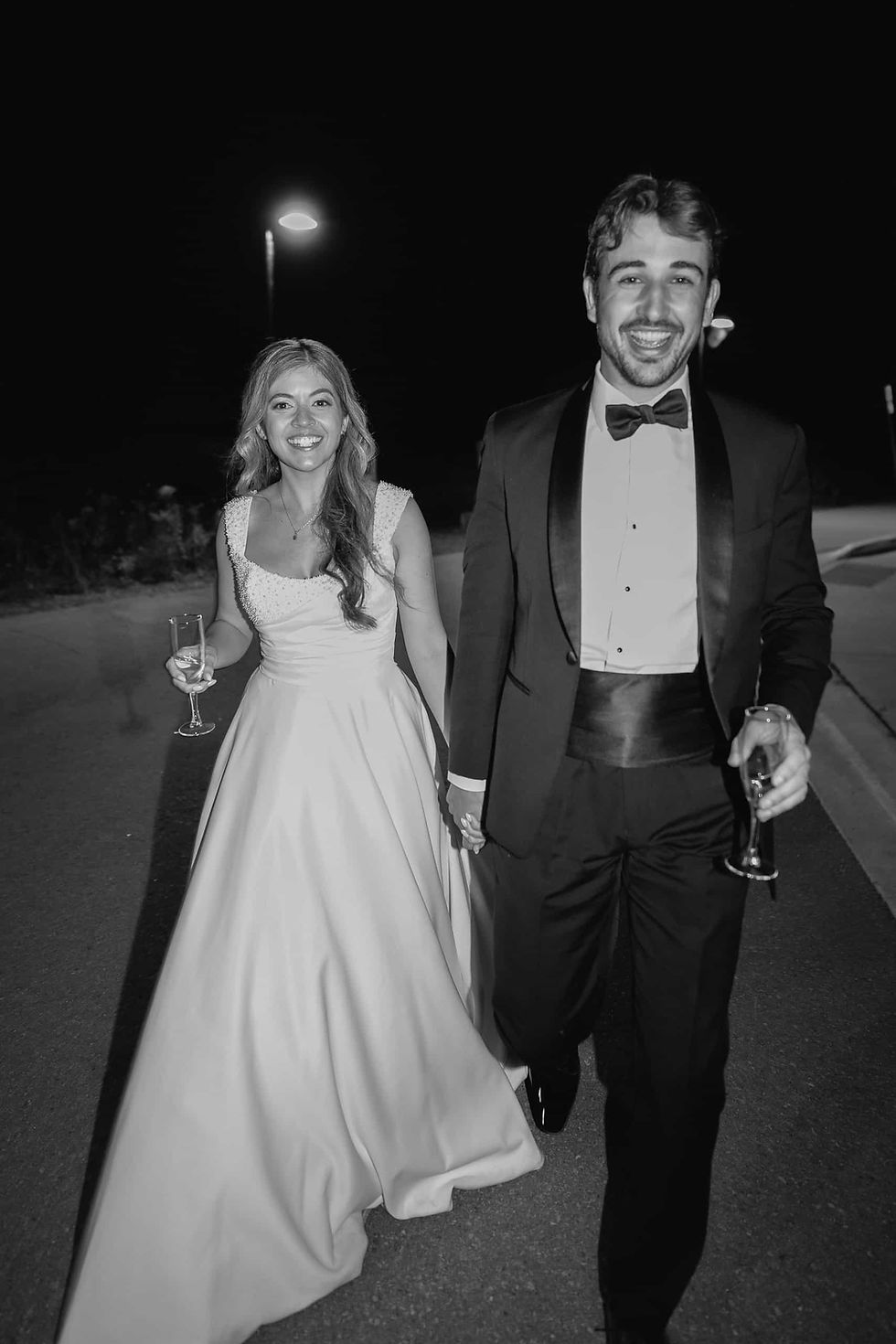
Here's the secret: that look isn't created in editing. It's created in-camera, by deciding what stays bright and what falls into shadow.
I light the couple intentionally—with controlled, directional flash—and let the rest of the frame melt into darkness. A simple champagne toast becomes intimate. The first dance feels like a private performance, even in a packed room.
This approach works especially well at venues like Casa Loma's Library or Guild Inn Estate where the architecture is dramatic but the ambient light is low. By lighting selectively, I emphasize the couple while letting the moody environment support the story rather than distract from it.
The key is restraint. Less light, placed strategically, creates more impact than flooding the entire room with brightness.
COMMON QUESTIONS ABOUT LOW LIGHT WEDDING PHOTOGRAPHY
Will my photos be too dark if we have a candlelit reception?
No—if your photographer understands how to light for low-light environments. The key is balancing off-camera flash (to properly expose your faces) with shutter drag (to let the ambient candlelight and venue lighting register in the background). This creates images that are both well-lit and atmospheric. Why do some wedding photos look orange in low light venues? This happens when the photographer's flash is daylight-balanced (cool, blue-toned) but the venue uses tungsten bulbs (warm, orange-toned). The camera's white balance tries to correct for one or the other, resulting in unnatural color casts. The solution is to gel your flash with CTO filters to match the venue's warmth, then set a custom white balance that preserves natural skin tones.
Do you use on-camera flash or off-camera flash?
I use off-camera flash exclusively for receptions. On-camera flash creates flat, unflattering lighting that eliminates the shadows and depth that make low light venues special. Off-camera flash, positioned strategically and modified with grids and gels, allows me to control exactly where light falls—creating dimension, separation, and that cinematic look clients want.
What if our venue doesn't allow flash photography?
Most venues that restrict flash are referring to on-camera flash during ceremonies, not reception lighting. I always confirm restrictions with venue coordinators in advance. If off-camera flash isn't allowed during the reception (rare), I use high-ISO capabilities and fast lenses to shoot with available light, though this limits the level of creative control and cinematic polish.
Will low light venues make our photos look grainy?
Not if your photographer uses proper lighting technique. Grain (digital noise) happens when you push your camera's ISO too high while relying entirely on ambient light. By using off-camera flash as the primary light source and keeping ISO in a reasonable range (1600-3200), I maintain clean, noise-free images even in the darkest venues.
How do you make chandeliers glow without blowing them out?
This requires balancing flash exposure with ambient exposure through shutter drag. I expose my flash for the couple's faces (usually around f/2.8-f/4), then slow my shutter speed (1/60 or 1/30) to let the chandeliers register without overexposing them. It's a delicate balance, but when done correctly, the fixtures glow beautifully without turning into white blobs.
PLANNING A LOW LIGHT RECEPTION IN TORONTO?
If you're getting married at Casa Loma, Steam Whistle, or any of Toronto's most atmospheric venues, let's make sure your photos do justice to the space you fell in love with. I'd love to show you how cinematic lighting transforms low light receptions into stunning, editorial-worthy galleries.I'd love to show you how cinematic lighting transforms low light receptions into stunning, editorial-worthy galleries.
View my wedding portfolio to see this approach across different venues, or get in touch to check availability for your wedding date.


Comments